
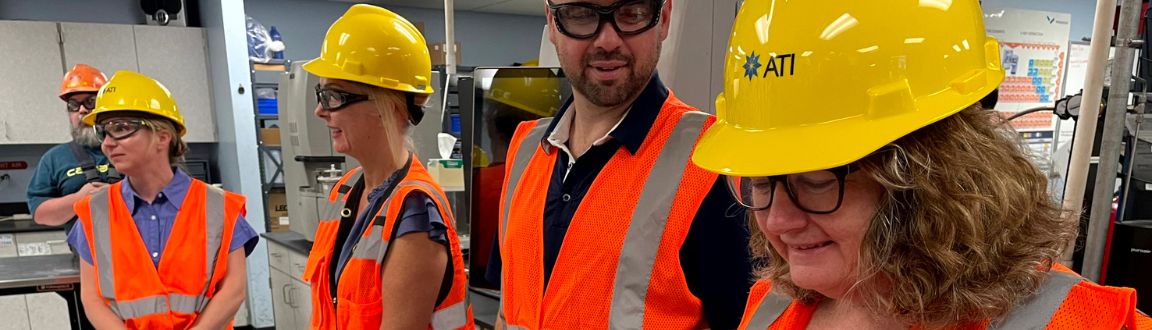
ATI tour showcases the impact of economic development in Washington state
By Jacquie Goodwill, OEDC MarCom lead
Commerce recently joined the members of the Washington Economic Development Association (WEDA) for their Summer Conference, “ENERGIZING INNOVATION” in the Tri-Cities. As part of the pre-conference activities, the City of Richland helped arrange an insider’s tour of ATI’s Richland facility, offering a close look at how economic development partnerships translate into jobs, investment and long-term community prosperity.
ATI’s Richland titanium manufacturing facility brings together advanced manufacturing, and workforce development. ATI employs 136 people at this facility, offering wages in the top 75th percentile for the region and supporting a network of local and regional suppliers whose goods and services contribute to the area’s economy.
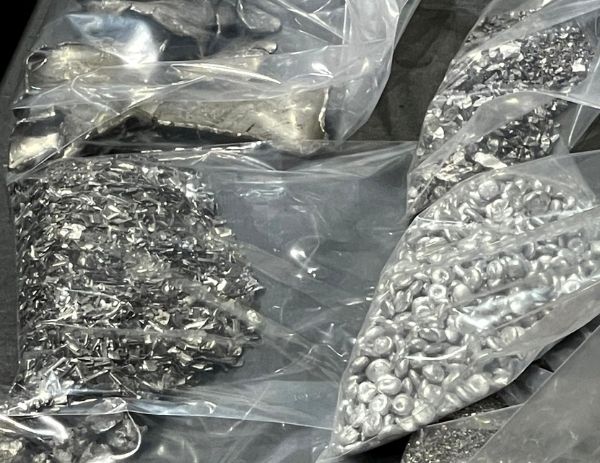
Titanium scrap and alloy (aluminum)
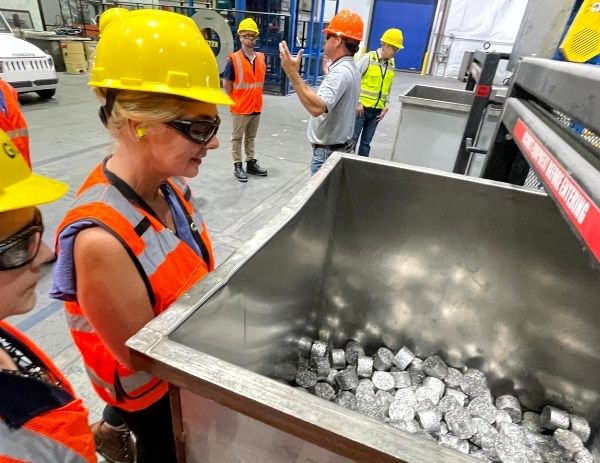
Tittanium pucks ready ready for the EB (electron beam) melting process
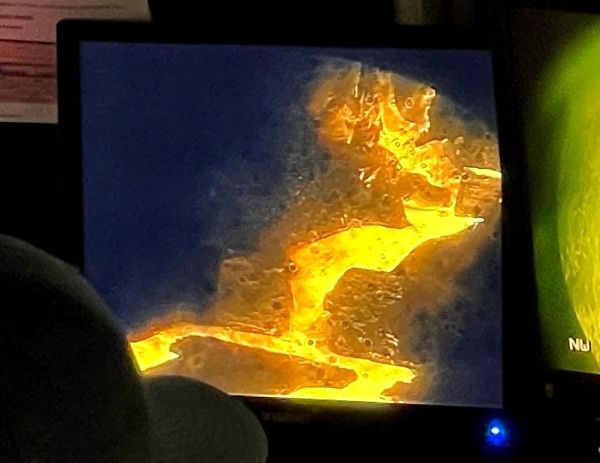
Melting scrap for re-use
Commerce collaborates with local and regional partners
“ATI is a great example of the kind of manufacturing growth we want to see in communities across Washington,” said Andrea Chartock, Assistant Director for the Office of Economic Development and Competitiveness at Commerce. “Companies like ATI bring significant investment and family-wage jobs to the region, and Commerce is proud to work with our local and regional partners to support their continued growth.”
In 2023, a $250,000 Governor’s Strategic Reserve Fund grant supported ATI’s facility expansion and job creation in the region, illustrating how targeted state support can help companies grow and strengthen local economies over the long term.
Choose Washington
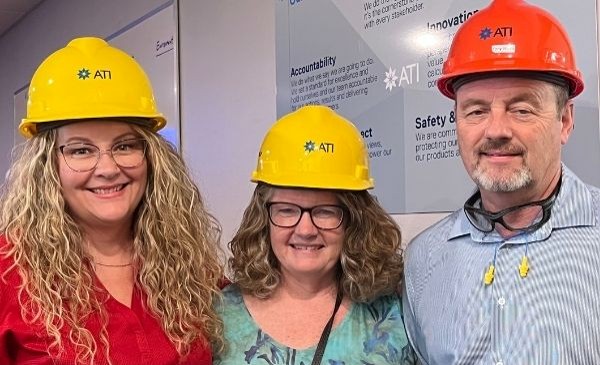
Left-to-Right: Mandy Wallner, City of Richland Economic Development Manager, Suzanne Dale Estey, WEDA Executive Director, Tony Harris, ATI Senior Director of Titanium Operations
Over the years, ATI has made a substantial commitment to Washington state and the Tri-Cities region, investing approximately $100 million in advanced manufacturing equipment and facility expansion, with nearly half spent with Washington-based companies. The company’s operations demonstrate the power of innovation at scale, transforming raw and recycled titanium scrap into premium quality products that primarily serve global aerospace and defense.
Tour participants learned how ATI’s titanium materials support supply chains that extend far beyond Washington’s borders, reinforcing the state’s role as a global manufacturing hub.
“The work of WEDA and Commerce and other partners supports business growth, workforce development and investment. It has a real impact on manufacturers like ATI,” said Tony Harris, senior director of operations for ATI’s Primary Titanium Operations, including the Richland facility.
For local leaders, ATI represents more than a manufacturing success story. It is an example of how state and local partnerships can create the conditions for companies to invest, grow and create family-wage jobs.
“ATI’s presence in this community demonstrates the importance of identifying targeted economic development incentives that recruit business into a community,” said Mandy Wallner, economic development manager for the City of Richland. “Our collaborative work helps encourage long-term investments in Washington.”
Those investments create a positive ripple effect, supporting suppliers, strengthening community resources and creating career opportunities for local residents.
The tour brought to life economic development at work in Washington. WEDA members, supported by Commerce, connect businesses with workforce programs, infrastructure, financing tools and community partners that help projects succeed.
“This was a unique chance for our WEDA conference attendees to see economic development in action, creating family-wage jobs, workforce investment and other benefits to a community,” said Suzanne Dale Estey, executive director of WEDA.
As communities across Washington compete for investment and talent, ATI’s Richland operation offers a compelling example of what can happen when industry, local government, economic development organizations and state partners work together toward a shared vision of economic opportunity.